November 25, 2026
What Families Applying from Overseas Should Check for AEIS
By @schoolentryguide
Understanding the AEIS and What It Means for Your Family
For families relocating to Singapore, the Admissions Exercise for International Students (AEIS) is the main route for your child to enter a mainstream primary or secondary school. The process involves an academic assessment, a placement test, and a series of administrative steps that can feel overwhelming when you are still overseas. Knowing what to prepare before you apply makes a significant difference in reducing stress and avoiding last-minute surprises.
The AEIS is not a general school application. It is a centralised exercise managed by the Ministry of Education (MOE) that places international students into government or government-aided schools based on their test performance and available vacancies. Your child's age and previous education determine the appropriate entry level, and the test covers English and Mathematics. Because the stakes are high and the timeline is tight, careful planning is essential. This is where expert guidance through AEIS preparation can help families feel more confident about each stage.
Check the Eligibility and Entry Level First
Before you fill out any forms, confirm that your child meets the basic eligibility rules. The AEIS is open to international students who are not Singapore citizens or permanent residents and who have not studied in Singapore schools before. Your child must be between seven and 16 years old as of 1 January of the year they intend to join school.
The entry level is determined by your child's age on that same date, not by the grade they were in back home. For example, a child who is 12 years old on 1 January will be considered for Secondary 1 or Secondary 2, depending on their academic level. Many families assume their child will enter the same grade they were in overseas, but MOE has its own age-based guidelines. Checking the official MOE placement table before applying saves time and avoids disappointment. If you are unsure, reviewing past exam papers or talking to someone familiar with the system can clarify what level your child should aim for.
Understand the Application Timeline and Key Dates
The AEIS is held twice a year: the main exercise in September or October, and a supplementary exercise (S-AEIS) in February or March. Registration periods open about two months before the test dates. Missing the registration window means waiting for the next cycle, which can delay your child's school start by several months.

Families applying from overseas need to plan around these dates carefully. You will need to submit your application online through the MOE portal, pay the registration fee, and upload supporting documents. The system only accepts applications during the specified period, and late submissions are not considered. Mark the opening and closing dates on your calendar, and set reminders well in advance. Also factor in time to gather documents and resolve any issues with scanned copies or translations.
Prepare the Required Documents Ahead of Time
The application requires several documents, and missing even one can delay the process. You will typically need your child's birth certificate, passport details, past school reports or academic transcripts, and any medical reports if relevant. Documents not in English must be accompanied by a certified translation.
It is wise to scan all documents in colour and save them as PDF files within the size limits specified by the portal. Check that your passport has sufficient validity, as the school placement will eventually require a valid Student's Pass. Some families also prepare a brief educational history of their child, including the curriculum followed and subjects taken, because this helps when discussing placement options. Having everything ready before the registration window opens means you will not be rushing to find a missing document at the last moment.
Plan for the Academic Assessment
The AEIS test covers English and Mathematics. For primary-level applicants, the test is tailored to the local syllabus, which can differ from what your child has studied abroad. The English paper tests grammar, vocabulary, comprehension, and writing skills. The Mathematics paper tests problem-solving and application of concepts, often in a format that expects the student to show working steps.
Because the test is based on the Singapore curriculum, many families find it helpful to expose their child to local textbooks or practice papers before the exam. Understanding the style of questions and the expected level of detail can make a real difference. For example, Singapore Mathematics places a strong emphasis on model drawing and heuristics, which may be unfamiliar to students from other systems. A few weeks of focused practice can build both skill and confidence. This is another area where expert guidance through AEIS preparation can provide targeted support, especially if your child is adjusting to a new language of instruction.
United Ceres College is also on Twitter.
Consider the Logistics of Taking the Test from Overseas
If your family is still abroad, you will need to travel to Singapore for the test. The AEIS is conducted at designated test centres in Singapore, and there are no overseas testing locations. That means you need to plan travel and accommodation around the test date. Book flights and accommodation early, as test dates fall during peak travel seasons for some nationalities.

Also consider the time your child will need to adjust to the time zone and environment. Arriving a few days early allows your child to rest and settle before the test. If possible, visit the test centre location in advance so your child knows where they are going on the day. The test itself is a few hours long, and parents are not allowed inside the examination area. Plan how your child will get to the centre, where they will wait before the test starts, and what they will eat during breaks. Small logistical details can affect performance, so think through the day step by step.
Understand the School Placement Process
The AEIS does not guarantee a school placement. After the test, MOE considers your child's performance and the available vacancies in schools. Successful candidates receive an offer for a specific school, usually within a few weeks of the test. You cannot choose the school, but you can indicate preferences on the application form regarding location or school type.
If your child is offered a place, you will need to accept it promptly and begin the process of applying for a Student's Pass through the Immigration & Checkpoints Authority (ICA). The school will provide the necessary documents for the pass application. If your child is not successful, you can consider reapplying in the next cycle or exploring alternative educational options such as international schools or private institutions. Knowing this in advance helps you set realistic expectations and have a backup plan ready.
Prepare Your Child Emotionally and Academically
Moving to a new country and sitting a high-stakes test can be stressful for any child. Talk openly with your child about what the test involves and why it matters, but avoid putting too much pressure on the outcome. Let them know that the test is just one step in a longer process, and that doing their best is what counts.
Encourage a balanced routine that includes study time, rest, play, and familiar activities from home. If your child feels anxious about the test, practicing under timed conditions can help them get used to the pace. Some families find that working with a tutor who understands the Singapore system gives the child a clearer sense of what to expect. The goal is to build competence without causing burnout.
Keep Communication Open with the School and Authorities
Throughout the application process, you may need to contact MOE or the school handling your child's placement. Keep copies of all correspondence, including emails and confirmation numbers. If anything changes in your circumstances, such as a change of address or passport number, update the relevant authorities as soon as possible.
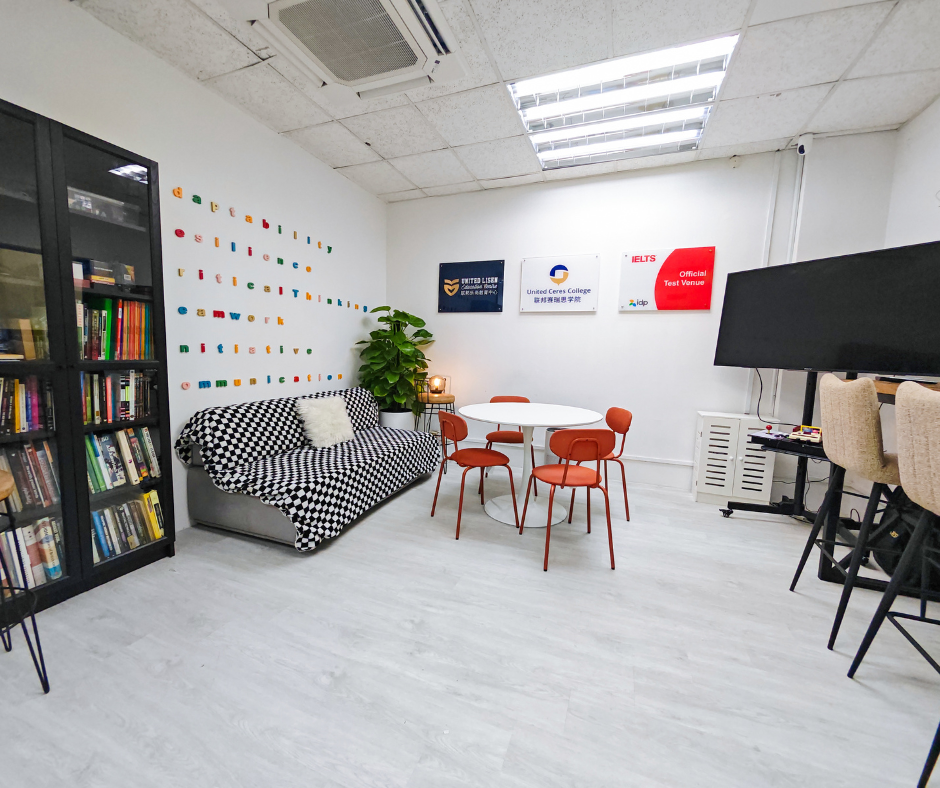
For families who prefer more personalised support, some private institutions offer preparatory programmes that cover both the academic content and the administrative steps involved in the AEIS. These programmes can be especially helpful for families who are new to Singapore's education system and want to ensure nothing is overlooked.
For more information on AEIS application support, United Ceres College at 37 Middle Rd, #05-00, Singapore 188946 can be contacted at +65 8699 3609.
❧